Verxalus
VERXALUS — CHANGE THE TRAJECTORY. CHANGE THE PARADIGM OF HYGIENE.
**Moving beyond the limits of orthogonal jets. Safer fluid dynamics for targeted hygiene and primary health protection.
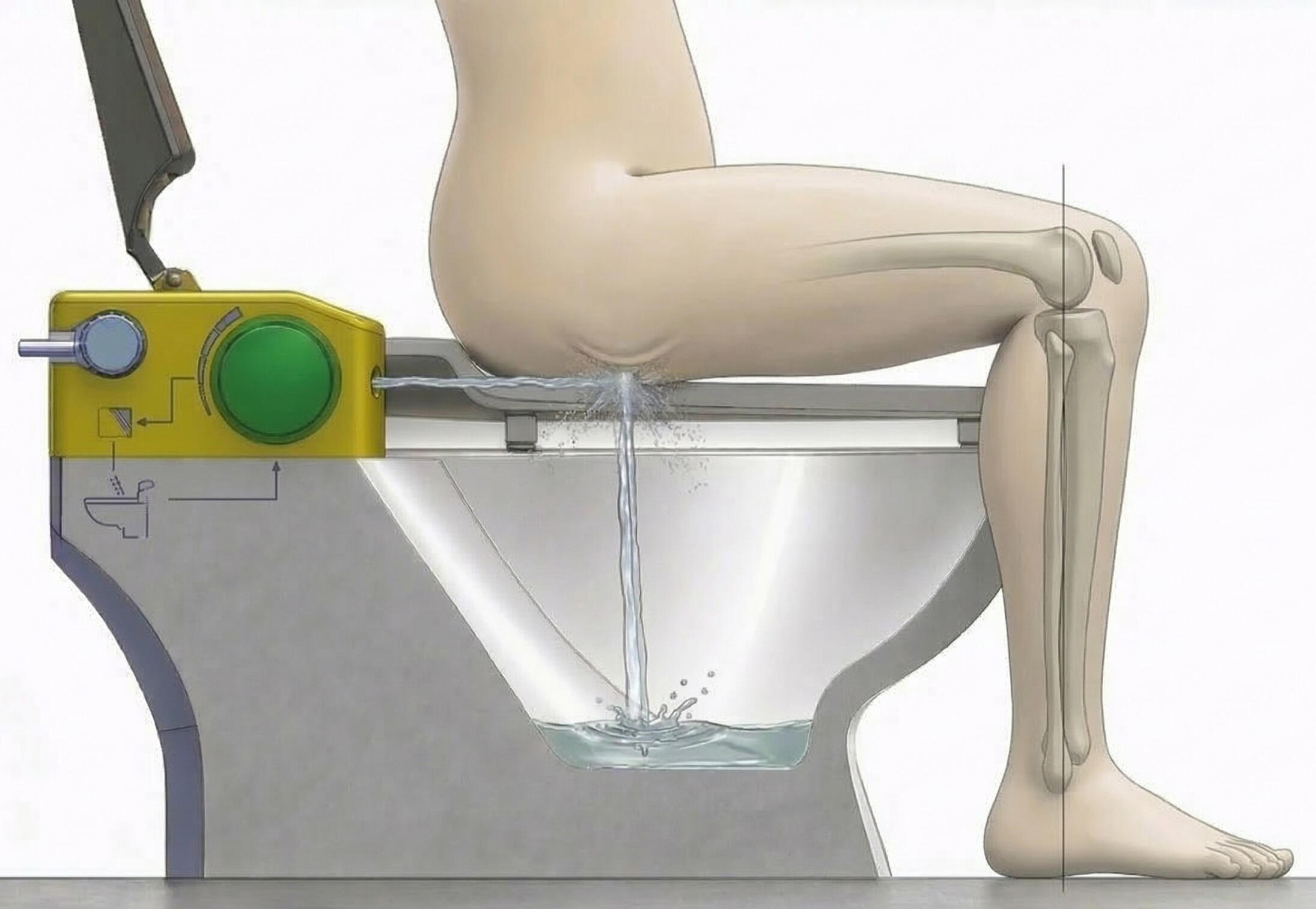
01 — THE PROBLEM
VERXALUS — CHANGE THE TRAJECTORY. CHANGE THE PARADIGM OF HYGIENE.Moving beyond the limits of orthogonal jets. Safe fluid dynamics for absolute hygiene and primary health protection.
For decades, electronic bidets have been designed around essentially the same principle: a nozzle positioned beneath the user, delivering a water jet upward toward the perineal area.This apparently simple solution presents a structural issue: the nozzle operates directly beneath the area it is intended to wash. During use, contact with fecal residues, droplets and splash-back cannot be structurally excluded.The question is therefore not only:How clean is the water entering the system?The more important question is:What happens to the washing system after it has entered the environment of contamination?This is not merely a theoretical question.A 2017 study conducted at a Japanese university-affiliated hospital examined all 292 electronic bidet toilets in the facility. Bacterial contamination was found on the warm-water nozzles of 254 units (86.9%), including a range of Gram-positive and Gram-negative organisms. The authors concluded that the contaminated nozzles represented a potential vehicle for cross-infection and recommended that these devices be included in infection-risk management.Subsequent Japanese medical literature continued to examine the issue. A 2021 review reported that bidet-toilet nozzle surfaces and spray water may be contaminated with fecal indicator bacteria, including Escherichia coli and Pseudomonas aeruginosa, as well as antimicrobial-resistant bacteria, and described the system as a potential vehicle for cross-infection in hospital settings.The issue, therefore, is not simply whether contamination exists, but whether the architecture of the washing system unnecessarily exposes the water-delivery component to the environment it is intended to clean.This leads to a different design question: Can contamination risk be reduced by changing the geometry of the washing process itself?
02 — THE VERXALUS SOLUTIONDON’T CLEAN THE PROBLEM. REDESIGN THE PATH.Verxalus approaches the problem from a different direction.Instead of directing the water jet vertically upward, Verxalus uses a controlled horizontal and tangential micro-jet.The nozzle can be vertically adjusted by up to 25 mm, allowing the trajectory to be adapted to individual anatomical differences while remaining within the structural limits of the seat.When the jet reaches the perineal area, the natural curvature of the skin redirects the water. The horizontal kinetic component is progressively dissipated, while gravity takes over, directing water and organic residues downward and into the toilet bowl.The intended path becomes:water → controlled contact → downward deflection → bowlrather than:water → upward impact → splash-back environment → washing systemThe objective is not to claim that contamination becomes impossible. It is to reduce the structural opportunity for contaminated material to return toward the water-delivery system by changing the geometry of the washing process itself.A SIMPLE WATER PATHThe internal architecture is deliberately kept simple and accessible. This creates additional possibilities for controlled introduction of a validated cleansing solution when required.The philosophy is therefore based on two complementary principles:prevention through fluid dynamics + active cleansing when necessary.FROM HYGIENE TO BIOLOGICAL MONITORINGThe Verxalus concept can evolve beyond washing.In the past, in some countries, toilet bowls were designed to temporarily retain fecal matter, allowing visual observation before flushing. The principle was simple: observe the biological material before it disappears into the drainage system.Today, that concept can be reinterpreted through miniaturization.Because MEMS-based sensing and analytical technologies can potentially operate with much smaller biological samples, there is no need to reproduce the large collection surface of traditional inspection toilets.A reduced and controlled collection area could provide the limited biological material required for future automated analysis.This MEMS capability is part of the Verxalus development vision. The integration and validation of the MEMS analytical system have not yet begun.The objective is to transform the toilet from a simple sanitary appliance into a platform capable of combining:HYGIENE → CONTROLLED WATER FLOW → BIOLOGICAL OBSERVATION → ANALYSIS2006 — THE EXPERIMENTAL BASISIn 2006, following medical authorization, a preliminary in-vivo observation was conducted on a female subject. After removal of fecal residues and washing with a dedicated bidet nozzle, a vaginal swab was taken. No fecal bacteria were detected in that sample.This preliminary observation became part of the experimental basis for the subsequent development of the tangential washing architecture.VERXALUS — CHANGE THE TRAJECTORY. CHANGE THE PARADIGM OF HYGIENE.
The Innovation: Fluid Dynamics over Brute Force
Our patented mechanism utilizes a horizontal micro-jet that safely channels water and waste downward, closing the nozzle behind a protective flap after use.
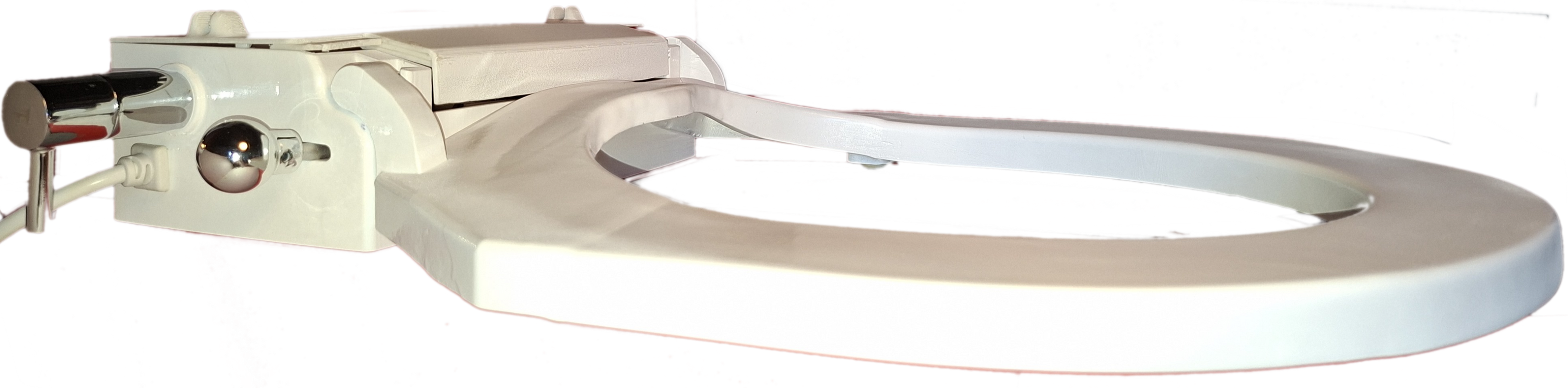
System Architecture & Internal Mechanics
1. Mixer Tap: Manual control for intuitive water flow and temperature management.
2. Micrometric Knob: Ergonomic spherical interface for precise control.
3. Actuator Mechanism: Zero-wear system managing linear and rotary micrometric movements.
4. Instant Heater: Integrated system for immediate thermal comfort.
5. Anatomical Seat Design: Precisely contoured for the coccyx and glutes, adapting to leg muscle structure to ensure uniform perineal alignment for every user.
6. Fixing Plate: Structural anchor points for secure installation on standard ceramic bowls. .
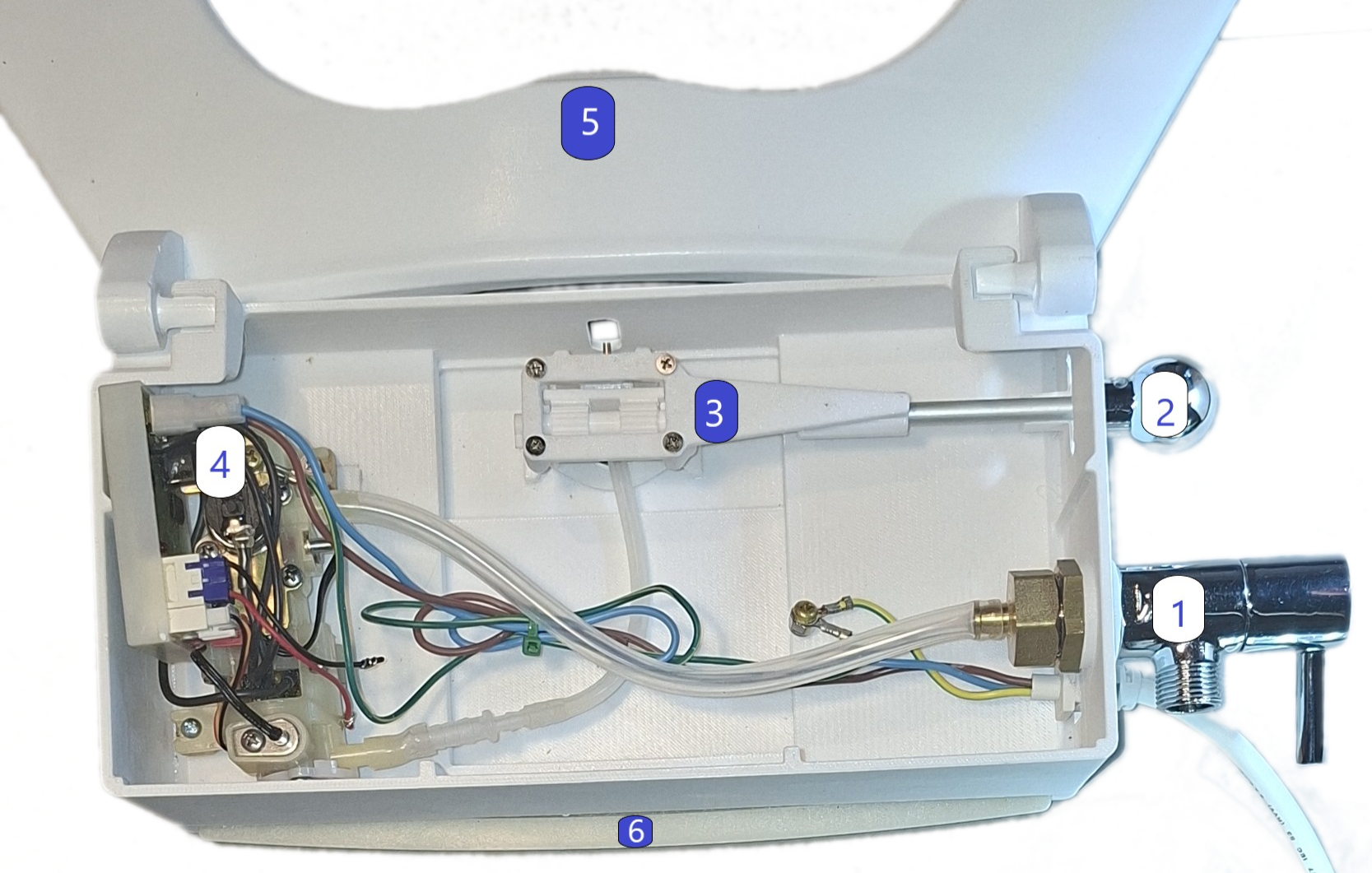
Micrometric Control & Dual Trajectory
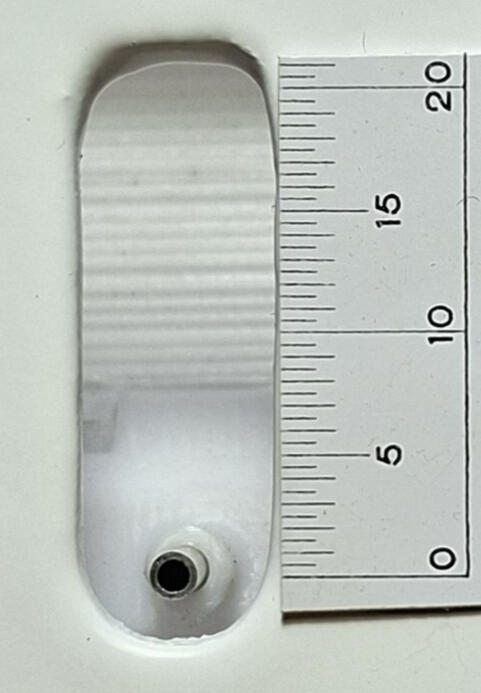
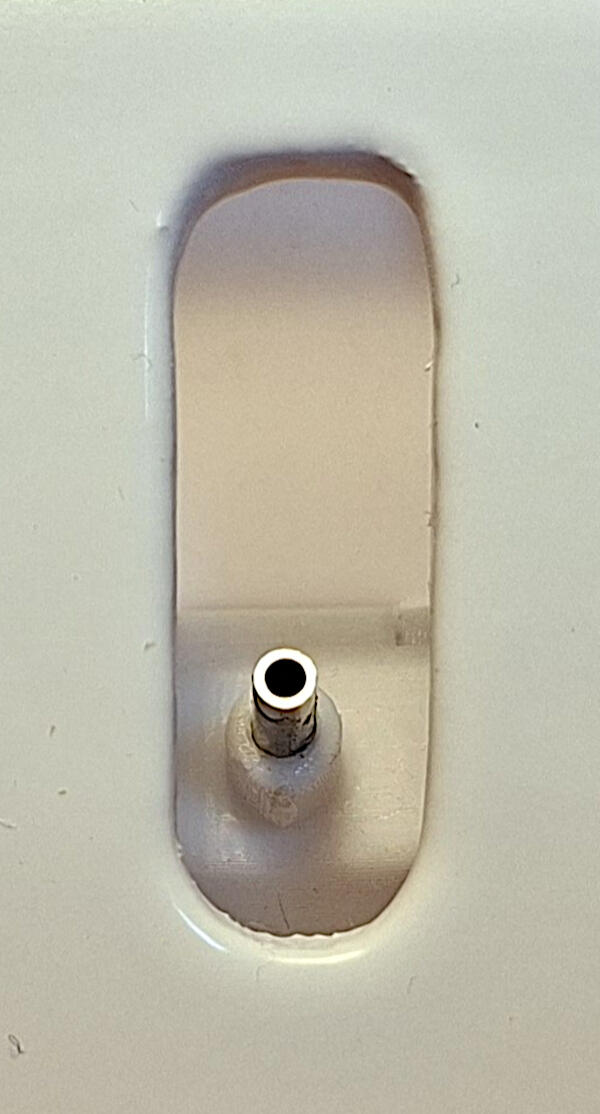
The 1.3 mm nozzle operates within a specialized horizontal slot, providing 25mm of micrometric linear travel. This allows for precise lateral adjustments of the micro-jet, ensuring perfect anatomical targeting without requiring the user to shift their body weight—a critical ergonomic feature that guarantees autonomy for users with reduced mobility.Furthermore, by positioning the nozzle at the lowest point of its stroke, the system activates a dedicated oblique trajectory. This specific angulation is engineered exclusively for feminine care, delivering a gentle, precise, and fully controlled irrigation to the genital area while maintaining absolute fluid dynamic safety.
The Engineering Evolution
The engineering maturity of Verxalus is the result of a rigorous development process. As demonstrated in the video of our early working prototype, the project initially envisioned a high-end, robotic targeting system. This version integrated micro-cameras, LED lighting, and AI-driven computer vision to automatically pilot the micro-actuators with surgical precision.Strategic Market Adaptation
While this phase successfully validated our two-axis kinematics, it prompted a strategic pivot based on global market demands. We realized the true disruptive value lies in the intrinsic cleanliness of the horizontal jet. By stripping away the complex software loops required by competitors, we adapted our robust mechanism to a highly reliable, manual analog control system.A Multi-Tiered Ecosystem
This versatility is our greatest commercial asset. It allows us to approach the mass-market B2C sector with ultra-reliable mechanical versions, while simultaneously offering B2B healthcare markets the automated, sensor-rich diagnostic hubs. Verxalus represents a protected technological ecosystem designed to disrupt both traditional sanitaryware and preventative healthcare.Text
Future-Proof: Health-Tech & MEMS Spectrometry
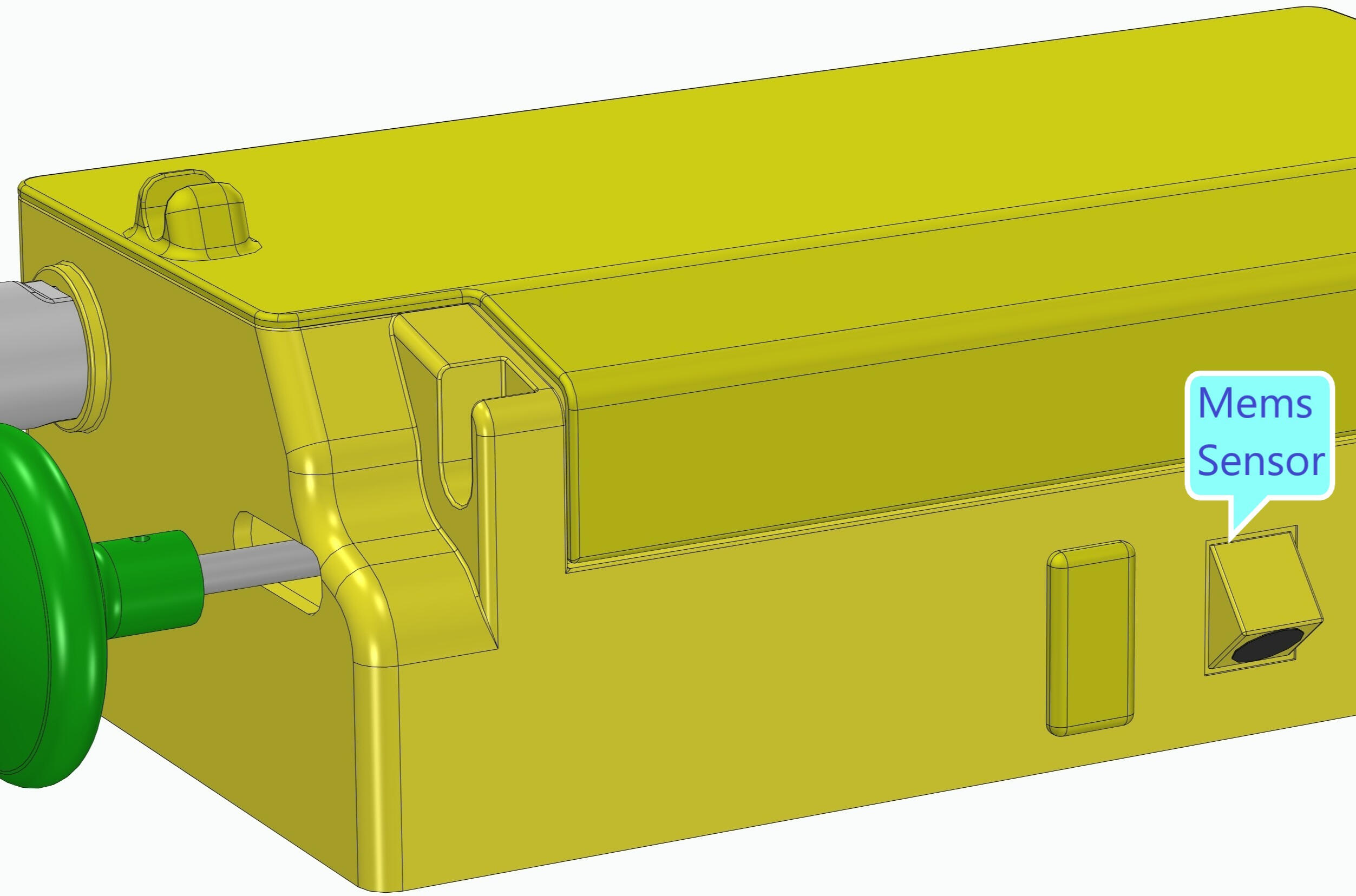
The BioSeat H&W architecture is explicitly designed to scale into the medical sector by housing a micro-MEMS spectrometer for non-invasive stool analysis. To ensure accurate optical sampling without altering user habits, the system supports two practical collection methods: a temporary, disposable holding support for standard toilets, or seamless integration with traditional flat-bottom ceramics (widely used in Central Europe for visual inspection). This modularity transforms daily hygiene into proactive health monitoring.
Architectural Flexibility: From Retrofit to Full Concealment
Plug & Play Retrofit
The standard BioSeat H&W module features a compact standalone housing designed to easily retrofit onto existing standard ceramic bowls. This external architecture allows for rapid market deployment and immediate accessibility, upgrading any standard bathroom into a health-tracking environment without requiring structural renovations.
Seamless Ceramic Integration
For the high-end residential, hospitality, and healthcare sectors, the mechanism is engineered for total concealment. The entire electronic and fluid dynamic core—including the MEMS spectrometry unit—can be seamlessly housed inside a custom ceramic bowl featuring an elevated rear profile, delivering a minimalist, wire-free aesthetic.
Independent Scientific Validation
The bacterial risk of traditional systems, certified on PubMed.Text
A Japanese medical study published on PubMed has empirically demonstrated that orthogonal-jet electronic bidets suffer from severe and frequent bacterial contamination of the nozzle (splash-back). This independent research certifies the urgent need for a new preventive health standard, confirming the absolute clinical necessity of the horizontal washing architecture patented by Verxalus.
Done
Independent Scientific ValidationText
Text